
Tried Everything for Pain Relief? Here Is What Acupuncture Actually Does Differently
- Thu Jul 9
Stretching can make your muscles feel longer for a short time, but it doesn’t fix the deeper issues that cause ongoing tension and stiffness. Massage therapy Milton works on the soft tissues, helping to release knots, boost circulation, and bring back normal movement, things stretching alone can’t do. If you keep feeling stiff even after regular stretching, the problem is probably more than just flexibility.
Stretching helps you stay flexible and is good for warming up. However, it doesn’t do much for long-term muscle tension. If your muscles have knots or the tissue around them is tight, stretching won’t fix the real problem. That’s why tension often comes back quickly.
Muscles that stay tight for a long time often have small, dense spots called trigger points. These can cause pain in other parts of your body and usually don’t respond to stretching. They need hands-on pressure and special techniques to release them.
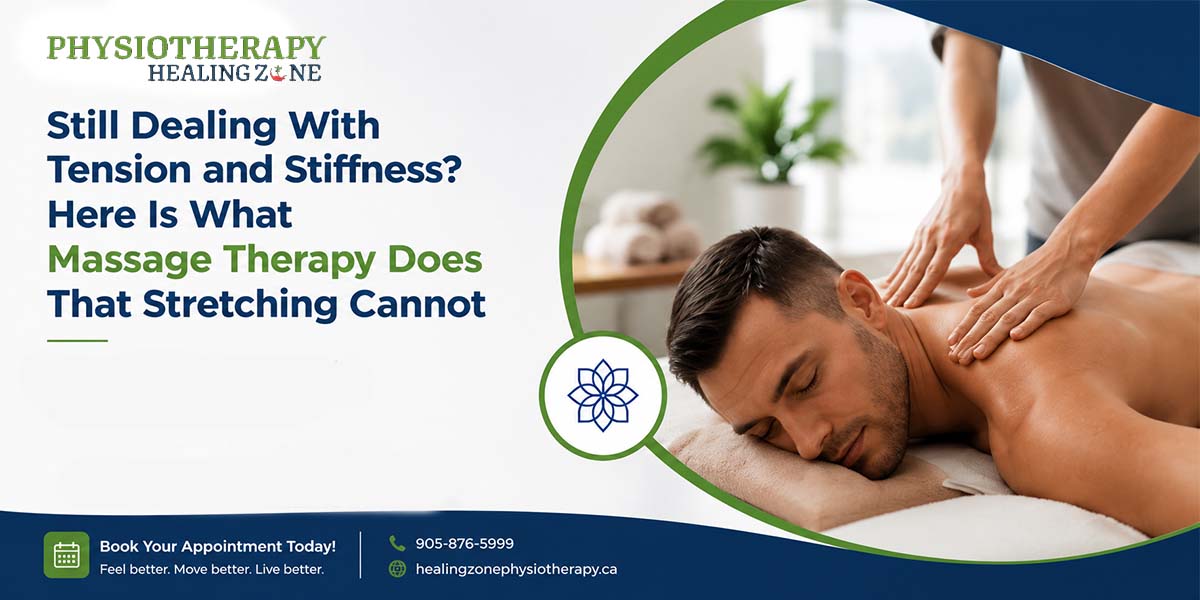
Massage therapy Milton works on soft tissues more deeply and precisely than stretching can. A registered massage therapist uses careful pressure to break up knots, release trigger points, boost blood flow to tight areas, and help your muscles relax.
Not all massages are alike. Relaxation massage is mainly for comfort, while therapeutic massage is a clinical treatment with a clear goal. Your therapist will choose the right approach based on your needs, not just follow a standard routine.
Massage therapy can assist in treating chronic pain in the neck and back, tension headaches, tight shoulders, sports injuries, poor posture, stress-induced muscles tension, and restricted movement from an accident or post-operative procedure. The therapy is most effective for soft tissue problems.
Massage therapy often works well alongside treatments such as physiotherapy, acupuncture, or shockwave therapy. When muscle tension is reduced, these therapies may be better tolerated or easier to perform. Depending on your condition and treatment goals, a care plan that includes Milton massage therapy may provide greater benefits than a single treatment approach.
At your first session, your therapist will start by asking about your history, symptoms, and what you hope to achieve. They’ll then use the technique that fits your needs best. Sessions usually last 30, 60, or 90 minutes. It’s normal to feel a bit sore in the treated area for a day or two afterward.
How often you come in depends on your condition. If you have a new issue, weekly sessions may help at first. For ongoing problems, coming in every two to three weeks can help you keep making progress. Your therapist will suggest a plan that fits your needs after your first visit.
If you continue to experience tightness in your muscles, it is a sign from your body that something is not quite right. Stretching can help, but it usually doesn’t fix the real problem. If your stiffness keeps coming back or pain is making it hard to move or sleep, seeing a registered massage therapist for an assessment is a smart next step. A qualified clinic can offer a focused, evidence-based approach to soft tissue problems that stretching alone can’t solve.
Most extended health plans in Ontario cover massage therapy if it’s done by a Registered Massage Therapist. It’s a good idea to check your plan details before your first visit so you know what’s covered.
Yes. Tension headaches are often caused by tightness in the neck, upper back, and shoulders. Massage therapy Milton that focuses on these areas can help lower how often you get headaches and how strong they feel over time.
At a physiotherapy clinic, massage is a clinical treatment done by a registered therapist after a proper assessment. The focus is on treating a specific problem, not just helping you relax