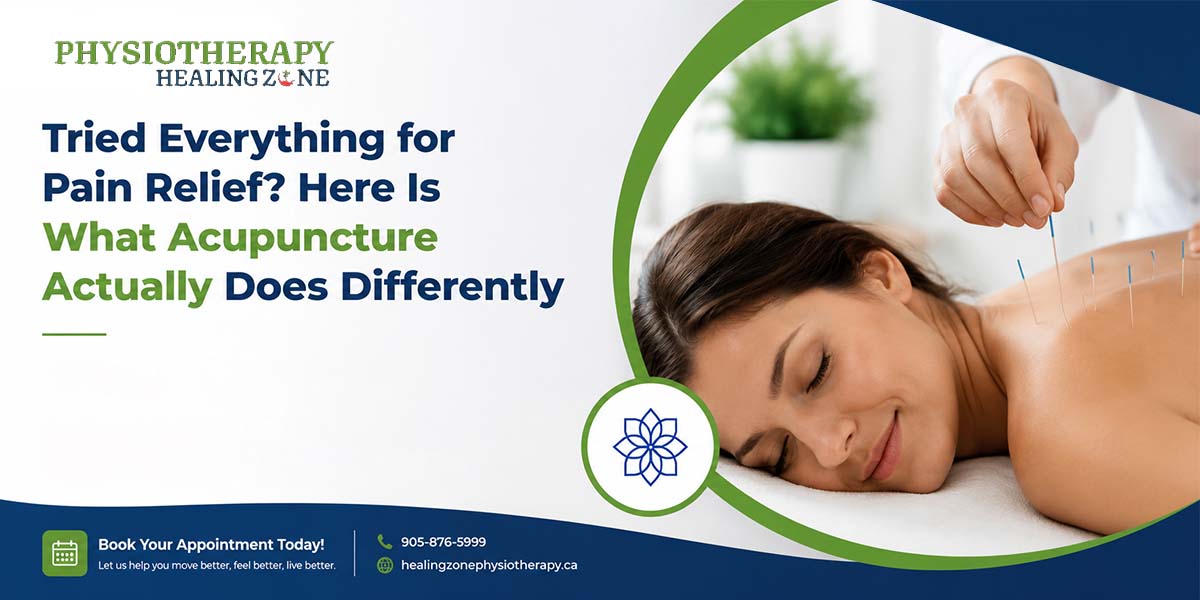
Tried Everything for Pain Relief? Here Is What Acupuncture Actually Does Differently
- Thu Jul 9
Acupuncture takes a different approach to pain relief by working directly with the nervous system. Rather than just covering up symptoms, it uses specific points on the body to help lower inflammation, boost circulation, and encourage your body’s natural healing. If you’ve tried medication, rest, or other treatments without lasting results, acupuncture Milton could be a clinically supported option to try.
Most common pain treatments are aimed at managing symptoms. Medication can lessen pain, but it doesn’t fix the root cause. Rest may help for a while, but it doesn’t solve deeper issues. Many people try these options for months before looking for something new.
Acupuncture uses very thin needles placed at certain points on your body. These spots are linked to pathways that affect how your nervous system handles pain. The aim isn’t to numb the pain, but to help change what’s causing it to stick around.
When the needles are placed in the right spots, your body reacts in a few ways. Blood flow to the area goes up, endorphins are released, and muscle tension starts to ease. With regular treatment, inflammation in the tissue can also go down over time.
Chronic pain often happens because nerve pathways stay sensitive and keep sending pain signals, even after the injury is gone. Acupuncture Milton can help break this cycle by helping your nervous system respond differently. That’s why people with long-term pain sometimes see results that other treatments haven’t given them.
Acupuncture therapy Milton can help with many issues, like chronic back and neck pain, headaches, migraines, joint pain, stress, trouble sleeping, hormonal imbalances, and recovery after injuries or surgery. It’s often used together with physiotherapy and other hands-on treatments to get better results.
Acupuncture is most effective when it is offered as part of a broader treatment plan rather than applied in isolation. A qualified therapist will assess your condition first and determine whether acupuncture is appropriate for your specific presentation before beginning any treatment.
Your first session starts with an assessment. The therapist will go over your health history, find the problem areas, and choose the right points for treatment. The needles stay in for about 20 to 40 minutes. Most people feel little or no discomfort, though some notice a mild tingling or warmth where the needles are placed.
How many sessions you need depends on your condition and how your body reacts. Short-term problems might get better in three to five sessions, while long-term issues usually need more time. Your therapist will check your progress and adjust your plan as needed.
If you’ve been dealing with pain for months and nothing seems to last, it might be time to look at what’s really causing the problem instead of just treating the symptoms. Acupuncture therapy Milton is a clinically supported option that works with your body’s natural healing. A qualified therapist can check your condition and let you know if acupuncture is a good fit for your recovery.
Yes. Acupuncture is commonly used alongside physiotherapy and other manual therapies. It works well as part of a combined treatment plan and is often more effective when integrated with other hands-on care rather than used as a standalone session.
Most people feel very little discomfort. The needles are much thinner than those used for injections. Some people notice a mild pressure or tingling, but this usually goes away in the first few minutes.
Some people notice changes after their first or second session, while others need a few more to see steady improvement. Results depend on what’s being treated and how long you’ve had the problem